 Image 1 of 2
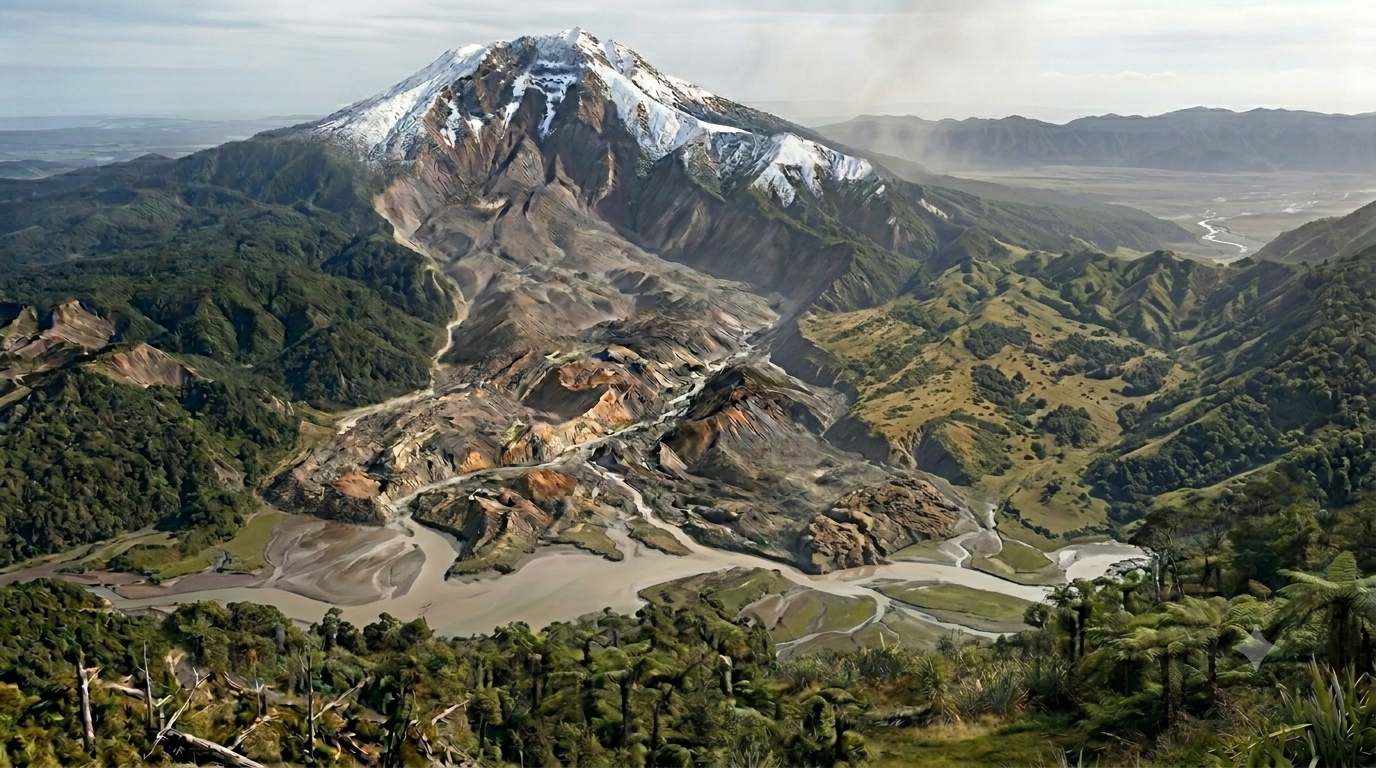 Image 2 of 2
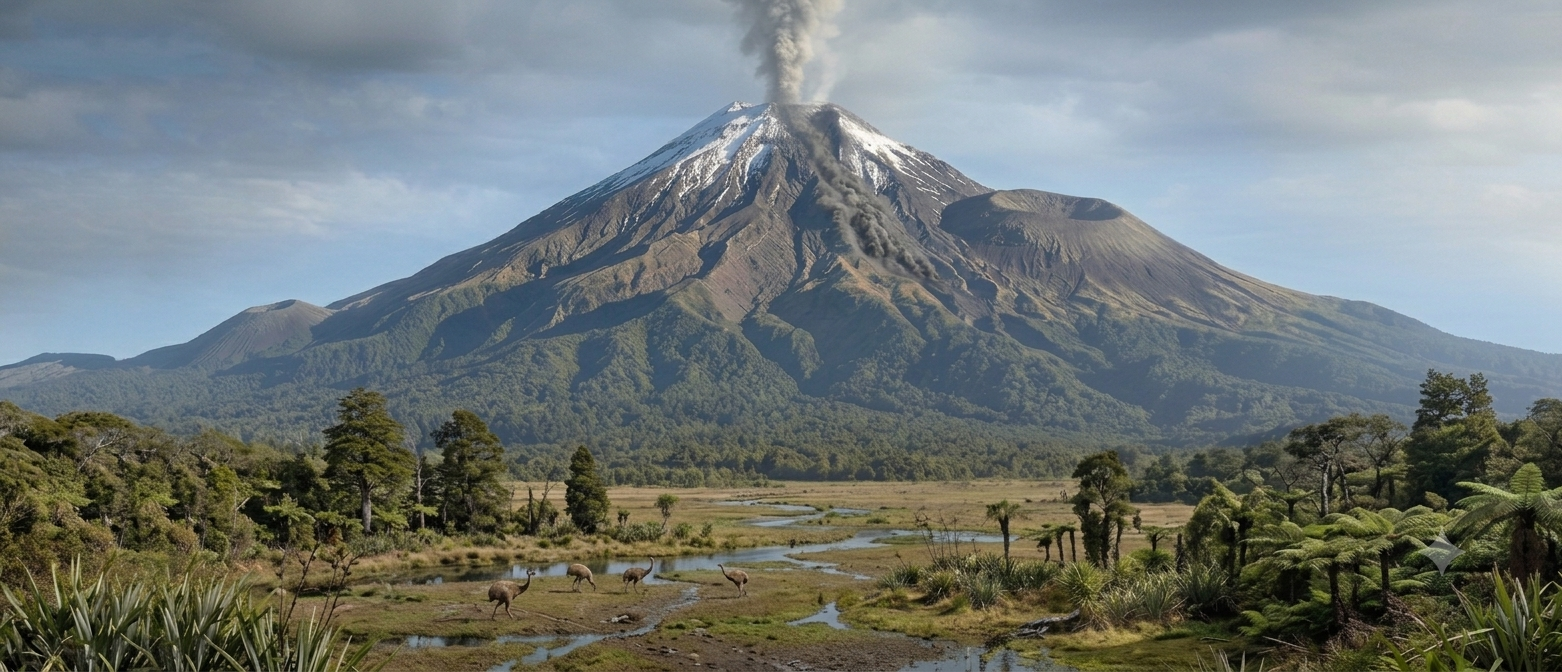
Let’s travel back in time to the dawn of the Pleistocene, when the Hamilton Basin was brought to life by fiery eruptions of basalt lava from ancestral Pirongia. Over the millennia to follow, Pirongia transformed from a humble shield volcano into a towering stratovolcano, not unlike how Taranaki looks today. Yet, such immense power came with a heavy cost. The volcano experienced a series of massive structural failures, culminating in a colossal collapse into the Kawhia area that dwarfed the 1980 eruption and collapse of Mount St Helens.
We will also explore the formation of its younger sibling volcanoes—Kakepuku, the striking pyramid-like cone near Te Awamutu, and Te Kaawa. Along the way, we will consider the wider significance of these peaks in the history of North Island volcanism, tying them to the relentless mechanics of the Hikurangi subduction zone and the retreat of the Pacific Plate towards the modern active Taupō Volcanic Zone.
Join us for a richly illustrated, compelling account of the dramatic geological origins of Pirongia, Kakepuku, and Te Kaawa.
Let’s travel back in time to the dawn of the Pleistocene, when the Hamilton Basin was brought to life by fiery eruptions of basalt lava from ancestral Pirongia. Over the millennia to follow, Pirongia transformed from a humble shield volcano into a towering stratovolcano, not unlike how Taranaki looks today. Yet, such immense power came with a heavy cost. The volcano experienced a series of massive structural failures, culminating in a colossal collapse into the Kawhia area that dwarfed the 1980 eruption and collapse of Mount St Helens.
We will also explore the formation of its younger sibling volcanoes—Kakepuku, the striking pyramid-like cone near Te Awamutu, and Te Kaawa. Along the way, we will consider the wider significance of these peaks in the history of North Island volcanism, tying them to the relentless mechanics of the Hikurangi subduction zone and the retreat of the Pacific Plate towards the modern active Taupō Volcanic Zone.
Join us for a richly illustrated, compelling account of the dramatic geological origins of Pirongia, Kakepuku, and Te Kaawa.